
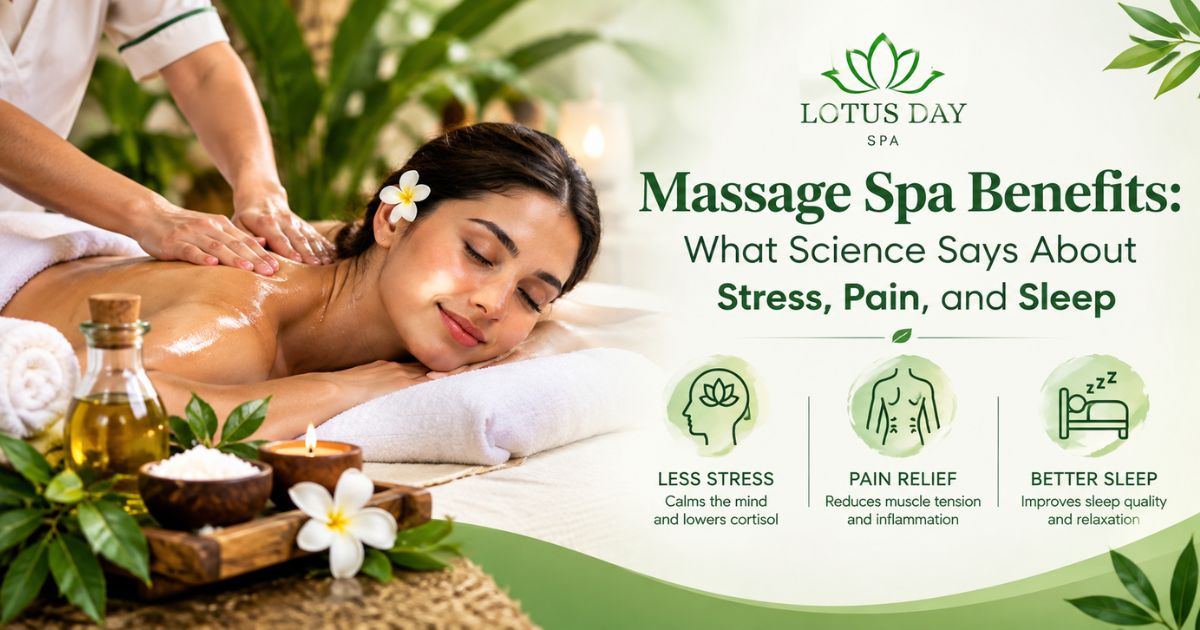
If you have ever left a massage spa feeling lighter, calmer, and strangely clear-headed, you already know something science has spent decades trying to prove: massage therapy genuinely changes your body’s chemistry. It is not just a feel-good indulgence — research from institutions like the Touch Research Institute and the National Institutes of Health shows that regular massage lowers cortisol, boosts feel-good hormones like serotonin and oxytocin, reduces chronic pain, and improves sleep quality. Whether you are dealing with tension headaches, sore muscles from a desk job, or nights of restless sleep, searching “massage spa near me” could be the first step toward a scientifically backed solution. In this guide, we break down exactly what the research says — and how a trusted local spa like Lotus Day Spa turns that science into real relief.
Why “Massage Spa” Searches Are Booming — And Why Science Backs the Trend
Wellness tourism and spa visits are no longer considered a luxury reserved for special occasions. More people now treat massage therapy as preventive healthcare, similar to exercise or a balanced diet. This shift is driven by a growing body of clinical evidence showing measurable, biological effects of massage on the nervous system, hormone levels, and musculoskeletal health.
At Lotus Day Spa, this shift is exactly why the treatment menu is built around outcomes — stress reduction, pain relief, and better sleep — rather than just pampering. Below, we unpack the science behind each of these three pillars.
The Science of Stress Relief: How Massage Calms Your Nervous System
Cortisol, Oxytocin, and the Stress Response
Cortisol is the body’s primary stress hormone. When it stays elevated for long periods, it is linked to anxiety, weight gain, high blood pressure, and poor sleep. Multiple studies, including research from the Touch Research Institute at the University of Miami, have found that massage therapy measurably lowers cortisol levels while raising oxytocin — the hormone associated with calm and social bonding.
At the same time, massage appears to reduce adrenocorticotropic hormone (ACTH), the signal that tells your adrenal glands to keep producing cortisol. The result is a two-pronged effect: you feel more relaxed, and your body’s internal stress machinery actually powers down.
The Parasympathetic Shift
Massage therapy is thought to shift the body from “fight-or-flight” (sympathetic nervous system) into “rest-and-digest” (parasympathetic nervous system) mode. This is why many people describe a massage session as the first time all week they have truly exhaled. Techniques like slow, rhythmic strokes and deep breathing cues — both used at Lotus Day Spa — are specifically designed to trigger this shift.
Key stress-related benefits supported by research:
- Lower cortisol and ACTH levels
- Increased oxytocin and serotonin production
- Reduced heart rate and blood pressure
- Improved mood and reduced anxiety symptoms
- Greater mental clarity and focus after treatment
The Science of Pain Relief: Does Massage Actually Work?
Chronic and acute pain are among the top reasons people book a massage spa appointment — and the clinical evidence is compelling.
How Massage Reduces Pain at a Biological Level
Massage stimulates the release of endorphins and enkephalins, the body’s natural painkillers. It also appears to reduce substance P, a neuropeptide associated with pain signaling and inflammation. Research has documented pain reduction in a wide range of conditions, including:
- Fibromyalgia — Randomized controlled trials found significant improvements in pain, anxiety, and quality of sleep after myofascial release massage therapy.
- Migraine — Studies show massage reduced migraine frequency by lowering stress hormones and inflammatory agents that trigger attacks.
- Chronic back and neck pain — Regular sessions improved circulation, reduced muscle tension, and increased flexibility in affected areas.
- Post-exercise soreness — Massage reduces inflammation-causing cytokines while increasing anti-inflammatory markers, speeding up recovery.
- Cancer-related pain — In clinical studies, therapeutic massage reduced pain, fatigue, nausea, and anxiety among patients undergoing treatment.
Frequency Matters for Pain Relief
According to recent clinical summaries, the strongest pain-relief outcomes came from a concentrated series of massage sessions — roughly six sessions over about a month — rather than a single one-off visit. This is one reason Lotus Day Spa offers membership and package options: consistency is where the real therapeutic value shows up.
The Science of Better Sleep: Can a Massage Spa Fix Your Sleep Problems?
Poor sleep affects nearly every part of daily life — mood, focus, immunity, and even weight management. Massage therapy will not cure a clinical sleep disorder, but research consistently shows it supports better, deeper, more restorative sleep.
What the Research Shows
A review of studies on massage and sleep found evidence that massage therapy may improve sleep quality across several populations, including people experiencing stress, chronic pain, and certain medical conditions. The proposed mechanisms include:
- Reduced muscle tension that would otherwise disrupt sleep
- Decreased anxiety and mental rumination before bedtime
- Improved blood circulation
- Activation of the body’s natural relaxation response
- A measurable shift toward parasympathetic (“rest”) nervous system dominance
Building Massage Into a Sleep Routine
Sleep researchers note that consistency amplifies the benefit. Pairing regular massage sessions with healthy sleep habits — a consistent bedtime, limited screen time, and a calming pre-bed routine — produces better results than massage alone.
Comparing Massage Types — Which One Matches Your Goal?
Not every massage style targets the same outcome. Here’s a quick comparison to help you choose the right treatment, whether your priority is stress, pain, or sleep.
| Massage Type | Best For | Pressure Level | Typical Session Length |
|---|---|---|---|
| Swedish Massage | Stress relief, relaxation, first-time visitors | Light to Medium | 60–90 minutes |
| Deep Tissue Massage | Chronic pain, muscle knots, sports recovery | Firm to Intense | 60–90 minutes |
| Aromatherapy Massage | Anxiety, mood, sleep support | Light to Medium | 60 minutes |
| Hot Stone Massage | Muscle tension, circulation, deep relaxation | Medium | 75–90 minutes |
| Myofascial Release | Fibromyalgia, chronic tension, mobility | Medium to Firm | 45–60 minutes |
Lotus Day Spa offers all five of these treatment styles, with therapists trained to recommend the right approach based on your specific stress, pain, or sleep concerns.
Massage Spa vs. Other Stress-Relief Options
How does a professional massage spa visit stack up against other popular stress-management methods? Here’s a side-by-side look.
| Method | Reduces Cortisol | Improves Sleep | Relieves Physical Pain | Requires Ongoing Cost |
|---|---|---|---|---|
| Massage Spa Therapy | Yes | Yes | Yes | Moderate |
| Meditation Apps | Yes (mild) | Moderate | No | Low |
| Over-the-Counter Pain Relief | No | No | Temporary | Low–Moderate |
| Gym / Exercise Alone | Yes (delayed) | Moderate | Sometimes worsens short-term | Moderate |
| Sleep Medication | No | Yes (short-term) | No | Moderate–High |
Massage stands out because it addresses all three concerns — stress, pain, and sleep — simultaneously, without the side effects associated with medication.
What to Expect During Your First Visit to Lotus Day Spa
If you are searching “massage spa near me” for the first time, here’s what a typical visit looks like:
- Consultation — A brief conversation about your stress levels, pain points, sleep quality, and goals for the session.
- Treatment Selection — Your therapist recommends a massage style (Swedish, deep tissue, aromatherapy, hot stone, or myofascial release) based on your needs.
- Private Treatment Room — You’ll relax in a calming, private space designed to support the parasympathetic “rest” response from the moment you walk in.
- The Massage Session — A 45–90 minute treatment tailored to your goals, using techniques backed by the research outlined above.
- Aftercare Guidance — Hydration tips, stretches, and recommendations on how often to return for optimal, cumulative benefits.
How Often Should You Visit a Massage Spa?
Frequency depends on your goal, and the research offers some useful benchmarks:
- For general stress management: Weekly or biweekly sessions appear to be the sweet spot for sustained cortisol reduction.
- For chronic pain relief: A concentrated series — around six sessions across a month — tends to produce the most noticeable improvement.
- For sleep support: Regular sessions combined with healthy sleep habits show better outcomes than occasional visits.
- For general wellness and maintenance: Monthly visits help maintain lower stress baselines and prevent tension from building back up.
Lotus Day Spa’s membership packages are structured around these exact frequencies, making it easier and more affordable to stay consistent — which, according to the research, is where the real benefit lies.
Signs You Might Need a Massage Spa Session Soon
- Persistent shoulder, neck, or lower back tension
- Frequent tension headaches or migraines
- Difficulty falling or staying asleep
- Feeling wired, anxious, or unable to “switch off” after work
- Muscle soreness that lingers for days after exercise
- A general sense of burnout or emotional exhaustion
If two or more of these sound familiar, it may be time to book a session.
Why Choose Lotus Day Spa
Among the many results you’ll find when searching “massage spa near me,” Lotus Day Spa stands out for a few clear reasons:
- Trained, licensed massage therapists who tailor each session to your stress, pain, or sleep goals
- A full menu of evidence-informed treatments, including Swedish, deep tissue, aromatherapy, hot stone, and myofascial release massage
- A calm, private, spa-grade environment designed to trigger genuine physiological relaxation, not just a change of scenery
- Flexible packages and memberships built around the frequency science recommends for lasting results
- A client-first approach, with consultations before every session to make sure the treatment matches your actual needs
Whether your priority is unwinding after a stressful week, managing chronic pain, or finally getting a full night’s sleep, Lotus Day Spa offers a research-informed path to feeling better — not just for an hour, but over the long term.
Conclusion
The evidence is clear: a massage spa visit is not just a pampering ritual — it is a measurable, science-backed way to lower stress hormones, relieve chronic and acute pain, and support deeper, more restorative sleep. From cortisol reduction to endorphin release to a genuine shift in your nervous system, the benefits of massage therapy touch nearly every part of physical and mental well-being. The key, according to the research, is consistency — regular sessions produce cumulative, longer-lasting results compared to a single visit. If you have been typing “massage spa near me” into a search bar, let that be your sign. Lotus Day Spa brings this science to life with tailored treatments, licensed therapists, and a calming environment built for real, lasting relief. Book your session today and give your body and mind the reset the research says you deserve.
Frequently Asked Questions (FAQs)
1. What are the main health benefits of visiting a massage spa? Massage spa treatments are linked to reduced cortisol (stress hormone) levels, lower chronic and acute pain, improved circulation, better sleep quality, and improved mood through increased serotonin, dopamine, and oxytocin production.
2. How often should I go to a massage spa for the best results? For general stress relief, weekly or biweekly sessions work well. For chronic pain, research suggests a concentrated series of around six sessions over a month tends to produce stronger, more lasting results.
3. Can a massage really help me sleep better? Yes. Studies show massage therapy can improve sleep quality by reducing muscle tension, lowering anxiety, and activating the body’s natural relaxation response. It works best as part of a consistent routine alongside other healthy sleep habits.
4. Which massage type is best for stress versus pain? Swedish and aromatherapy massage are best suited for stress and relaxation, while deep tissue and myofascial release massage are more effective for chronic pain and muscle tension.
5. Is massage therapy safe for people with chronic conditions like fibromyalgia? Research has shown massage-myofascial release therapy can improve pain, anxiety, sleep quality, and overall quality of life in fibromyalgia patients. Always consult your therapist or doctor about your specific condition before booking.
6. How do I find the right “massage spa near me”? Look for a spa with licensed therapists, a range of treatment options, and a pre-session consultation process — like Lotus Day Spa — so your treatment is matched to your specific stress, pain, or sleep goals rather than a one-size-fits-all approach.
7. What should I expect at my first Lotus Day Spa appointment? You’ll start with a short consultation about your goals, followed by a tailored treatment in a private room, and finish with aftercare guidance on hydration, stretching, and how often to return for the best results.
Contact Lotus Day Spa
Location: North Goa (Baga Beach / Calangute)
Website: https://lotusdayspas.com
Phone: 7249477056